




Multnomah County's Approach
Unsheltered Homelessness
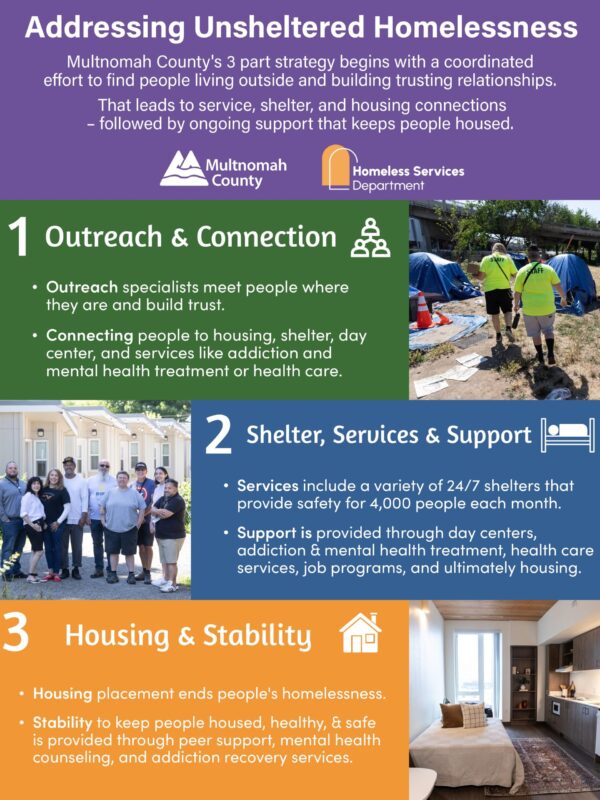
Multnomah County’s three-part strategy for unsheltered homelessness begins with a proactive, coordinated effort to find people living outside and building trusting relationships that lead to service and housing connections. We are able to track our progress getting people inside and on a pathway to a home of their own through a by-name list of people experiencing homelessness, allowing us to better track people living unsheltered by reporting the results of our work through monthly dashboards. Our work to build a modern data-driven system not only helps Multnomah County end people’s homelessness, but the entire tri-county region.
Three-part strategy
 Outreach & Connection
  Shelter, Services & Support
  Housing & Stability
 Part One
Outreach & Connection
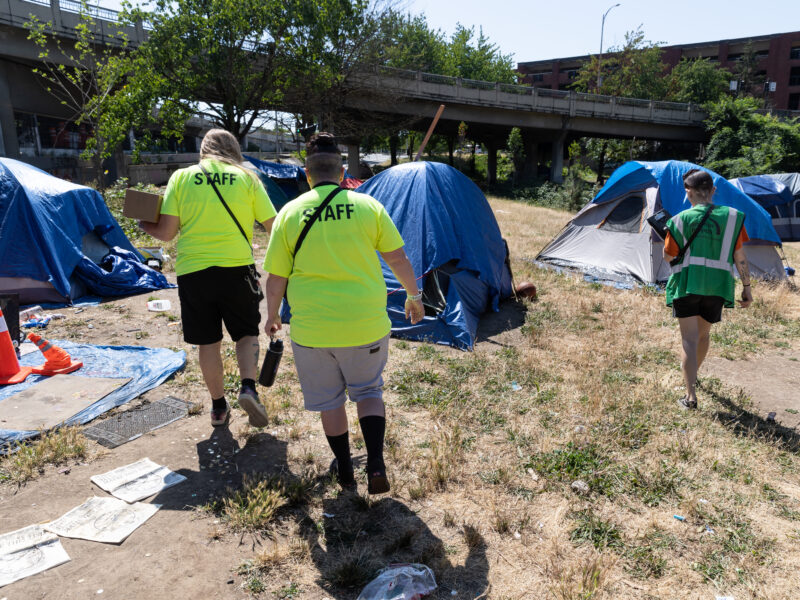
Multnomah County has expanded and refined street outreach efforts since 2020. Specialists are now divided into either geographic or population-specific assignments and meet weekly to coordinate their plans, discuss specific service needs, and problem-solve challenges. Their core assignment is to meet people where they are and build the trust needed to connect them to housing, a shelter, a day center and other services like addiction and mental health treatment, health care services, food assistance, and job programs. Better data collection allows leadership to measure progress and coordinate efforts across the County, and new tools like a shelter availability tracker have enhanced this work.
Between July and October of 2025, our outreach teams made over 5,000 connections with people living outside. Over 70% of those connections included getting people into shelter, performing assessments for medical needs and housing readiness, housing placement, and survival support.
Part Two
Shelter, Services & Support
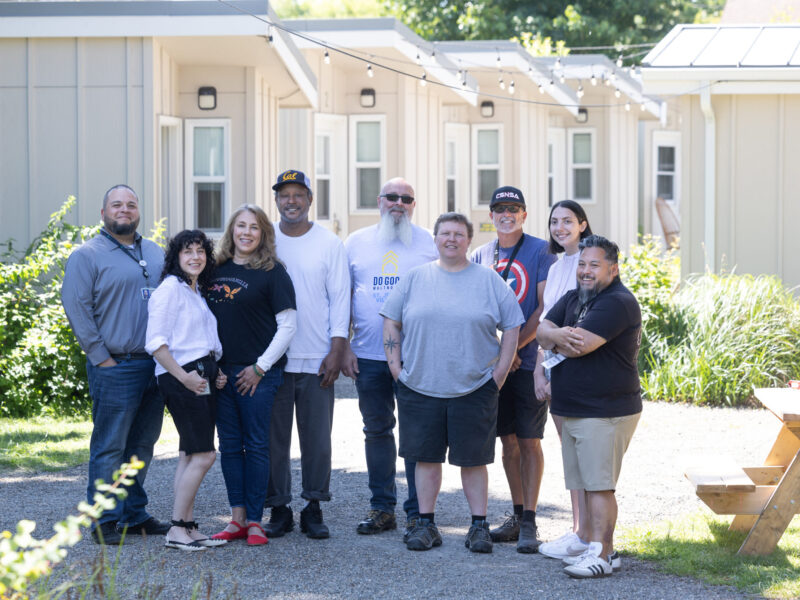
The services our outreach workers connect people to have expanded in recent years. Multnomah County has added more than 1,000 24/7 shelter beds since 2020 and funds 11 day service centers alongside investments in housing placement options to meet the diverse needs of those experiencing homelessness. The County has opened villages, motel programs, family shelters and more that support over 4,000 unique people each month. We continually evaluate our approach, especially as revenue declines. For example, we have used scattered site motel vouchers for families during winter months, and are now expanding that approach to serve youth and adults. This provides a trauma informed, cost-saving option that protects the health and safety of vulnerable populations by offering private accommodation compared to congregate shelter settings.
Multnomah County’s entire continuum of homeless services — from eviction prevention to street outreach to 24/7 shelters to recovery services to housing placement to employment services and everything in between — are focused on helping adults, families, veterans, domestic and sexual violence survivors, people in recovery, and so many more end their experience with homelessness and achieve long-term stability.
Part Three
Housing & Stability
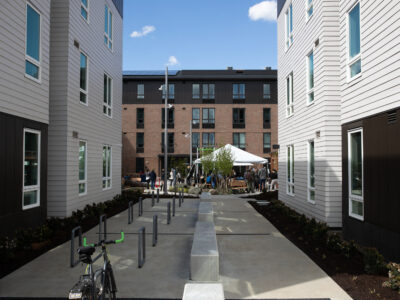
Ending someone’s homelessness does not start and end with shelter. Multnomah County remains committed to ending people’s experience with homelessness by helping people move back into housing. This includes short or long-term rent assistance. In the model of permanent supportive housing, long-term rent assistance is paired with comprehensive services such as peer support, mental health counseling, and addiction recovery services. The Supportive Housing Services Measure has allowed the County to help thousands of people find a home and also the stability to stay housed.
Nearly 9,000 people are currently not homeless due to our housing programs. 84% of people placed into permanent supportive housing have remained housed for more than two years. We’ve done that even though our region is making little progress creating more homes that people with low incomes can afford. Housing is also crucial for sheltering more people. The more often we move someone from a shelter bed to an apartment, the more people we can bring inside from the street to continue their path back into a home of their own.

Share this information
Download additional resources.