




Current initiatives
Oregon All In and Oregon Rehousing Initiative
Last year, Gov. Kotek declared a state of emergency. She directed counties across Oregon to meet rehousing, shelter and eviction prevention goals by Jan 10, 2024. Soon after, statewide emergency funding began in late April 2023, leading to the formation of local Multi-Agency Coordination (MAC) groups for cross-jurisdictional planning.
In response to the humanitarian crisis, Multnomah County and the City of Portland successfully re-housed, sheltered and prevented evictions for hundreds of households — meeting or exceeding the goals set by Gov. Tina Kotek’s office.
Outcomes for Multnomah County and the City of Portland
 234 households housed
 Exceeded goal to rehouse 186 households
 140 shelter beds created
 Met goal of creating 140 beds.
 1,474 evictions prevented
 Exceeded goal of preventing evictions for 1,426 households
Multnomah County and City of Portland meet or exceed every Oregon All In goal
Housing
- Goal: 186 households moved from homelessness into housing
- Outcome: 234 households moved into housing
The Homeless Services Department (HSD) and providers, through the Multnomah County MAC Group, housed 234 households using Oregon All In resources.
Partnership with the City of Portland was essential to achieving this goal. Because, although a small number of households were rehoused directly from the streets, most housing placements were from city-shelter sites. This included Safe Rest Villages (SRVs) and Temporary Alternative Shelter Site (TASS) (Clinton Triangle).
TASS and SRVs provided 509 shelter units and are city-led projects that began development in 2022 and 2021, respectively. Furthermore, they operate alongside over 2,000 shelter beds in villages, motels or congregate sites funded through the HSD. This effort includes hundreds of households placed into housing through various local funding streams.
Shelter
- Goal: 140 beds created
- Outcome: 140 beds created
In July 2023, the City of Portland opened Mayor Wheeler’s first TASS (Clinton Triangle) funded by state emergency resources through the MAC group. The City funded the site capital construction while state emergency funded the purchase of shelter pods. Soon after, the site was operational within three months upon announcing the site.
Eviction Prevention
- Goal: prevented eviction for 1,426 households
- Outcome: eviction prevented for 1,474 households
The County’s Bienestar de la Familia program, was supported by state emergency funding and $1.2 million in federal funding. With it, they expanded rent assistance for households facing or at risk of eviction. This allowed their outreach workers to engage directly with families facing or at risk of eviction either at the courthouse or at their homes.
The County allocated additional resources to support this work after learning that the expected cost per household exceeded the state’s initial estimates. Additionally, efforts to exceed the state’s goals included preventing evictions for thousands using various local and federal resources over the past 12 months.
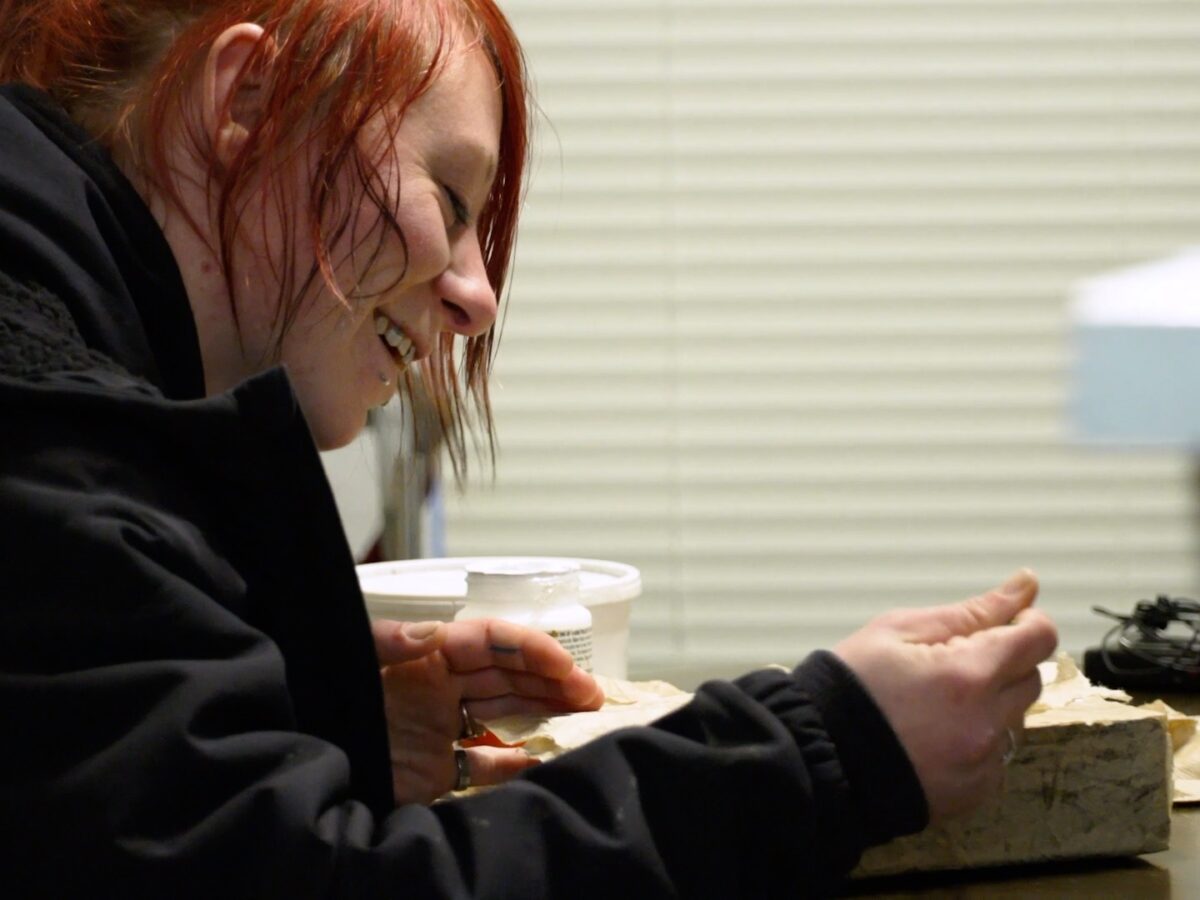
Jessica's story


When I first heard housing was an option, I didn’t believe it.
After more than a decade on the streets, Jessica moved into her own apartment in December 2023, thanks to Oregon All In and provider Do Good Multnomah.
Next steps
While Oregon All In has ended, Multnomah County continues work with the state on ongoing rehousing initiatives. As such, in 2024, Gov. Tina Kotek extended her original executive order that created Oregon All In. Furthermore, the state launched the Oregon Rehousing Initiative to continue the work of Oregon All In.
As a result, Multnomah County will be receiving $3.39 million in additional funding from the State to support other people’s move out of homelessness. With that, funding will be used to house adults, and expand the focus to homeless families and youth — populations with fewer opportunities compared to adult-only households. The goal is to house 100 households by June 30, 2025, as part of this initiative.