
Exceeding Housing Placement Goals
(147% of Annual Goal for Households)
1,463 people (994 households) moved from streets and shelters into permanent homes, including neighbors experiencing chronic homelessness and living with disabilities.



Multnomah County FY 2026 SHS Annual Report
At the midway point of the ten year Metro Supportive Housing Services (SHS) measure, Multnomah County has released its FY 2026 Annual Report, showing that local voter investments are delivering steady progress and surpassing major benchmarks. Today, 6,055 formerly homeless individuals (3,956 households) are living in safe, permanent homes because of these sustained investments.
These outcomes represent real lives transformed. For community members like JH, an unhoused veteran who found shelter and supportive care through the Thayer Family Foundation Veterans Shelter operated by Do Good Multnomah, these services provided the foundation for a fresh start. Through his stay, JH entered recovery, secured a job, purchased a car, and reconnected with his family.
Even with these successes, the struggle on our streets remains very real. For every neighbor placed into housing, three more fall into homelessness due to rising rents and broader economic headwinds. As we enter the second half of this ten year investment, Multnomah County is focused on long term operational resilience, strong provider accountability, and safeguarding the life saving housing solutions that keep our community secure.
Highlights from July 1, 2025 to June 30, 2026
(147% of Annual Goal for Households)
1,463 people (994 households) moved from streets and shelters into permanent homes, including neighbors experiencing chronic homelessness and living with disabilities.
A total of 6,055 people previously experiencing homelessness are currently in safe and stable housing.
93% of people in permanent supportive housing remained housed after one year (beating the 85% regional target).
84% of people in rapid rehousing remained stably housed one year after rent assistance ended.
(153% of Annual Goal)
1,711 people (1,147 households) avoided homelessness through rent assistance and eviction prevention programs.
201 new supportive housing units added; (1,751 units added since July 2021) — reaching 78% of 10-year goal (2,235 units).
4,434 people (3,718 households) found safe shelter across 1,871 county-funded beds and units.
Six outreach teams connected with 640 newly identified unsheltered neighbors using a new geographic zone model.
$168.7M (86% of SHS budget) went directly to community organizations, beating the minimum spending benchmark by 6%.
In permanent supportive housing, 98% of households were experiencing chronic homelessness, extremely low income and at least one disabling condition.
Systemwide, 53% of people across Supportive Housing Services programs reported living with a disability.
BIPOC people made up 65% of all new and sustained housing placements and 57% receiving eviction prevention.
In rapid rehousing, retention for most BIPOC people exceeded goals.
By-Name List data shows rate of BIPOC people experiencing homelessness has trended downward each year since 2023.
Real Progress
Behind every statistic is a story. Discover how Year Five of the SHS measure is making an impact where it matters most.

CSCC Story
'It gives me hope'
Cross-sector case conferencing bridges gaps between healthcare and housing.
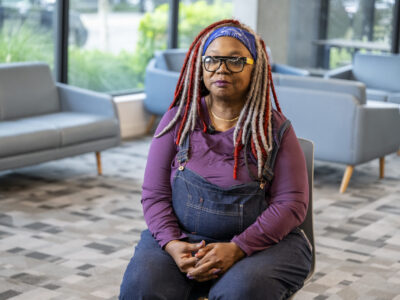
Pamela's Story
'Overjoyed to have a key to my apartment'
After years of housing instability, Pamela has a lease in her name.
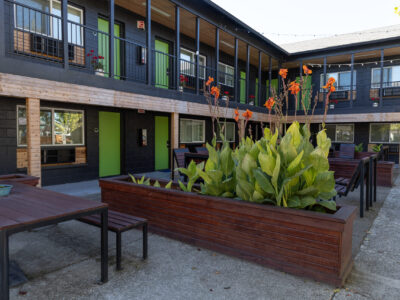
JH's Story
'If you have the want and the will, you can overcome'
JH finds stability at Thayer Family Foundation Veterans Shelter.
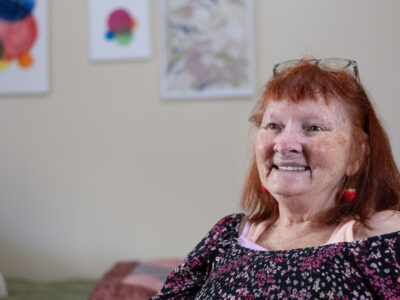
Barbara's Story
'I feel safe'
Barbara is housed with help from the SHS measure.